You might picture Hawai‘i indoor-outdoor living as walls that disappear and patios that stay open all day. In Waimea, the reality is more thoughtful and, for many buyers, more interesting. This upcountry setting asks a home to respond to cool mornings, steady wind, seasonal rain, and drier summer conditions. If you are exploring Waimea homes, understanding that balance can help you spot outdoor spaces that feel comfortable, useful, and true to the land. Let’s dive in.
Why Waimea feels different
Waimea is not a beach climate. The broader area sits in a mid-elevation environment, and Waimea-Kohala Airport is listed at 2,671 feet south of Kamuela Town. Local research also describes the area as part of the leeward slopes with mean annual temperatures around 57 to 66 degrees, annual rainfall of 20 to 50 inches, strong winds, and droughty summers.
That combination shapes daily life in a very real way. Hawai‘i may be mild year-round, but elevation and mountains create sharp changes in temperature and rainfall over short distances. In Waimea, that means indoor-outdoor living is less about maximum exposure and more about comfort, shelter, and smart orientation.
What indoor-outdoor living means here
In Waimea, a great outdoor space usually works with the breeze instead of fully opening to it. Historic guidance from Waimea homes shows that window placement mattered because homes were oriented to capture airflow without taking the full force of strong trade winds. That same idea still applies when you evaluate today’s homes.
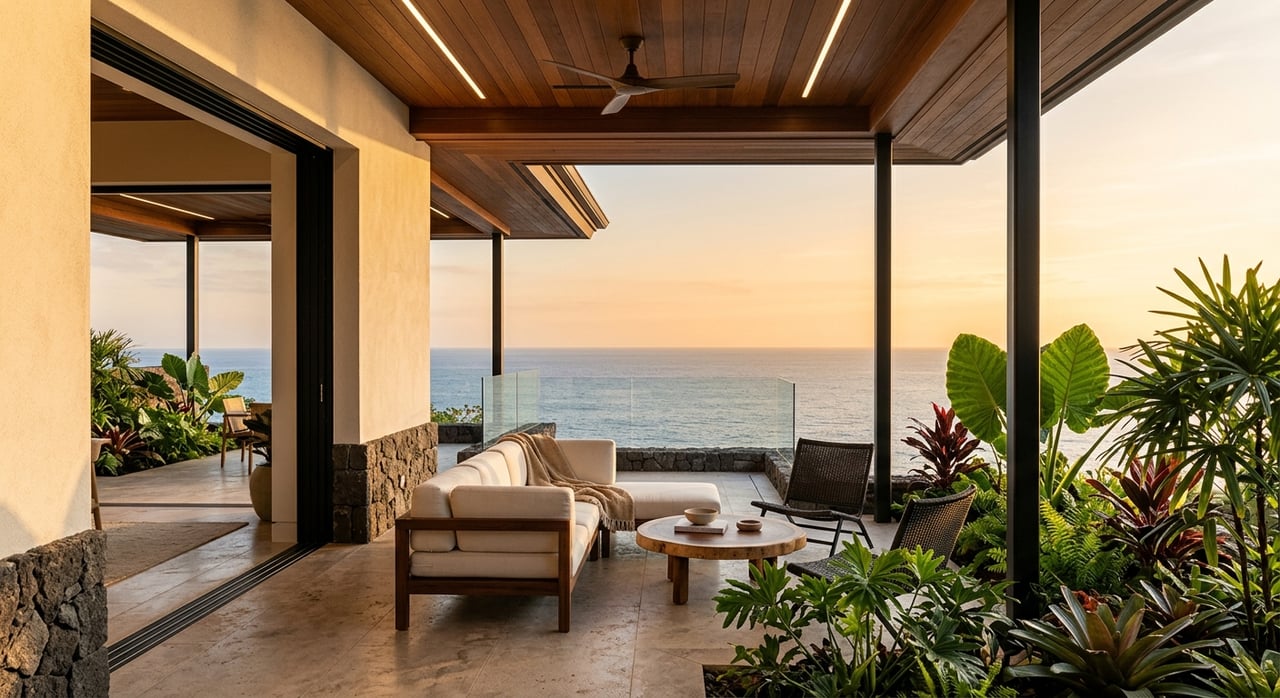
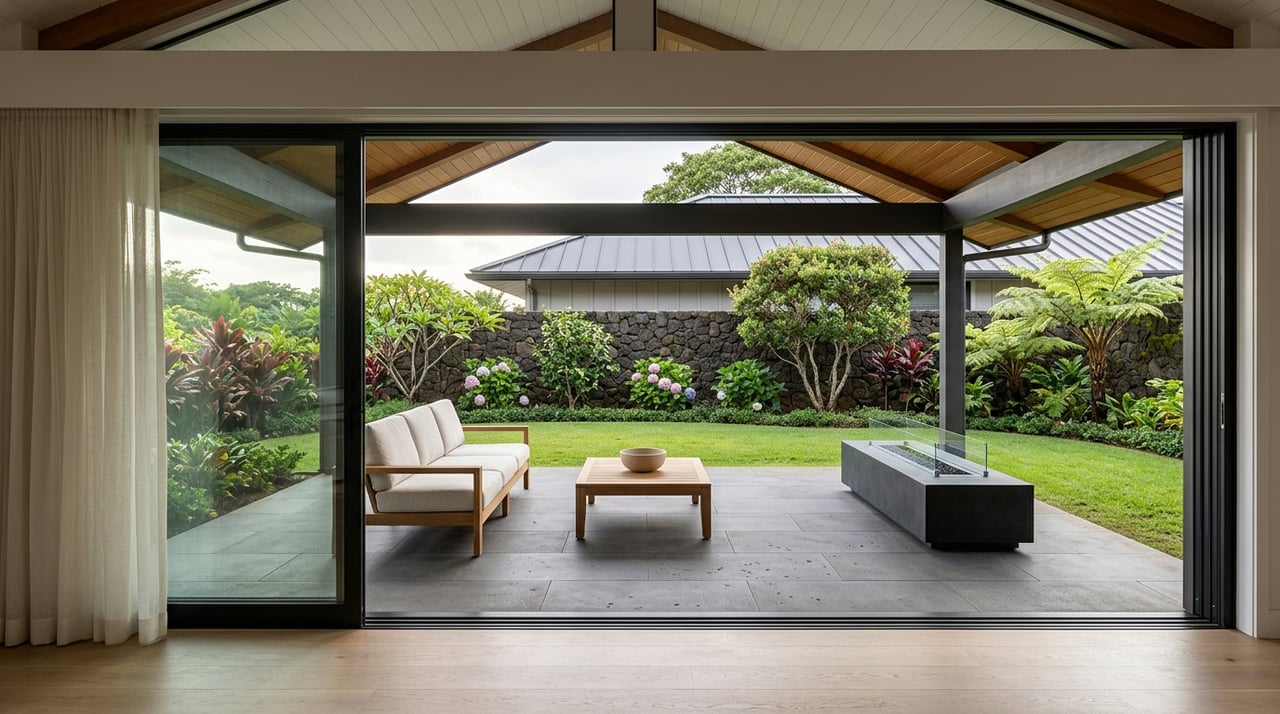
A beautiful lanai is not just a visual feature. It should help create a usable outdoor room in changing weather. In many Waimea properties, deep eaves, partially protected seating areas, and thoughtful circulation between indoors and out can matter as much as the size of the lanai itself.
From a design perspective, this is where a home either lives well or does not. A property can have generous square footage outdoors, but if the wind exposure is too intense or the transition from inside to outside feels awkward, you may not use that space the way you hoped.
What to look for in a Waimea lanai
If indoor-outdoor living is high on your list, start with function. In Waimea, a lanai often performs best when it offers both openness and protection.
Look for features like these:
- Partial shelter from prevailing trade winds
- Deep roof overhangs or eaves
- Seating areas that feel protected rather than exposed
- Window and door placement that supports airflow
- Easy access from kitchens, living rooms, or dining areas
- Outdoor circulation that does not force you into the wind
The goal is simple. You want a space that works on a breezy afternoon and still feels inviting during cooler morning hours.
How orientation affects comfort
On Hawaiian lots, orientation can make a major difference in how outdoor areas feel. University of Hawai‘i guidance notes that the north and east sides are typically windier, the north side is colder, and the south side receives the most intense sun. It also notes that the southwest is often the best area for a garden.
For you as a buyer, that means a home’s layout deserves close attention. A lanai on the wrong side of the house may look appealing in photos but feel less comfortable in person. A more sheltered position, paired with thoughtful windows and landscaping, can create a much more livable year-round experience.
Gardens need a real plan
Outdoor living in Waimea often includes more than a lanai. Many buyers are also drawn to garden space, small pastures, or acreage that supports a stronger connection to the land. Here again, the climate matters.
In drier areas, access to water comes first. University of Hawai‘i guidance also points to the value of windbreaks and good sun exposure when choosing a garden site. If you are considering a property for gardening or landscape enjoyment, it helps to think beyond appearance and ask how the site will function over time.
Smart garden questions to ask
Before you fall in love with a yard or acreage, consider practical details like these:
- Where is the most protected part of the lot?
- Is there easy access to water for landscaping?
- Are there signs of windbreak planning?
- Which areas get the strongest sun?
- Is the outdoor space set up for seasonal changes?
These questions can tell you a lot about whether the property supports the lifestyle you want.
Why water planning matters
Waimea’s drier summer pattern makes water planning an important part of outdoor living. Hawai‘i generally sees a wetter season from about November through April and a drier season from May through October. In leeward areas, much of the rainfall can come from winter storms.
That seasonality affects how landscapes perform. If a property includes larger grounds, gardens, or agricultural potential, it is worth understanding the water setup early. University of Hawai‘i guidance describes rainwater catchment as a rooftop-to-storage system used in Hawai‘i for domestic supplies, agriculture, landscape uses, and storm-runoff control.
For some Waimea properties, especially acreage homes and garden-oriented parcels, catchment and irrigation can be meaningful parts of the lifestyle equation. They may influence how easily you can maintain outdoor spaces through drier periods.
Waimea homes reflect the land
One of the most appealing things about Waimea is that its homes often reflect the area’s ranch history and upland setting. Historic examples tied to Parker Ranch and Anna Ranch show a built environment shaped by utility, weather response, and day-to-day connection to the land. You see that in forms ranging from ranch cottages to larger heritage homes.
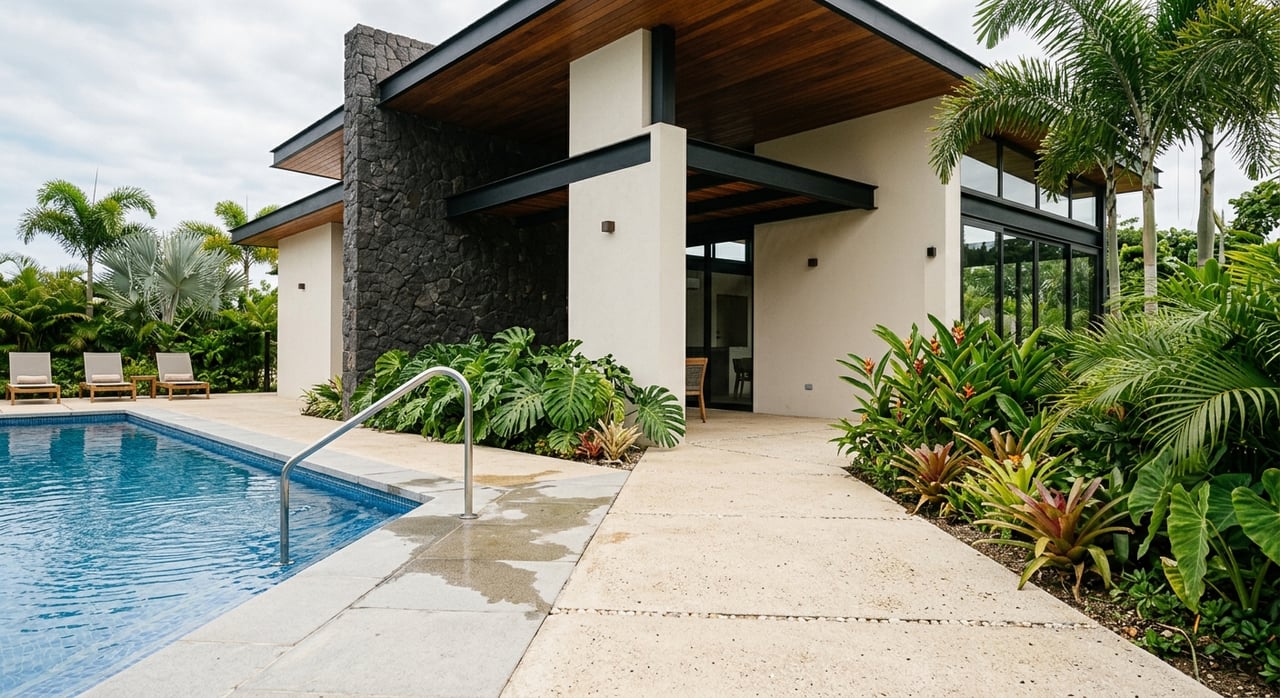
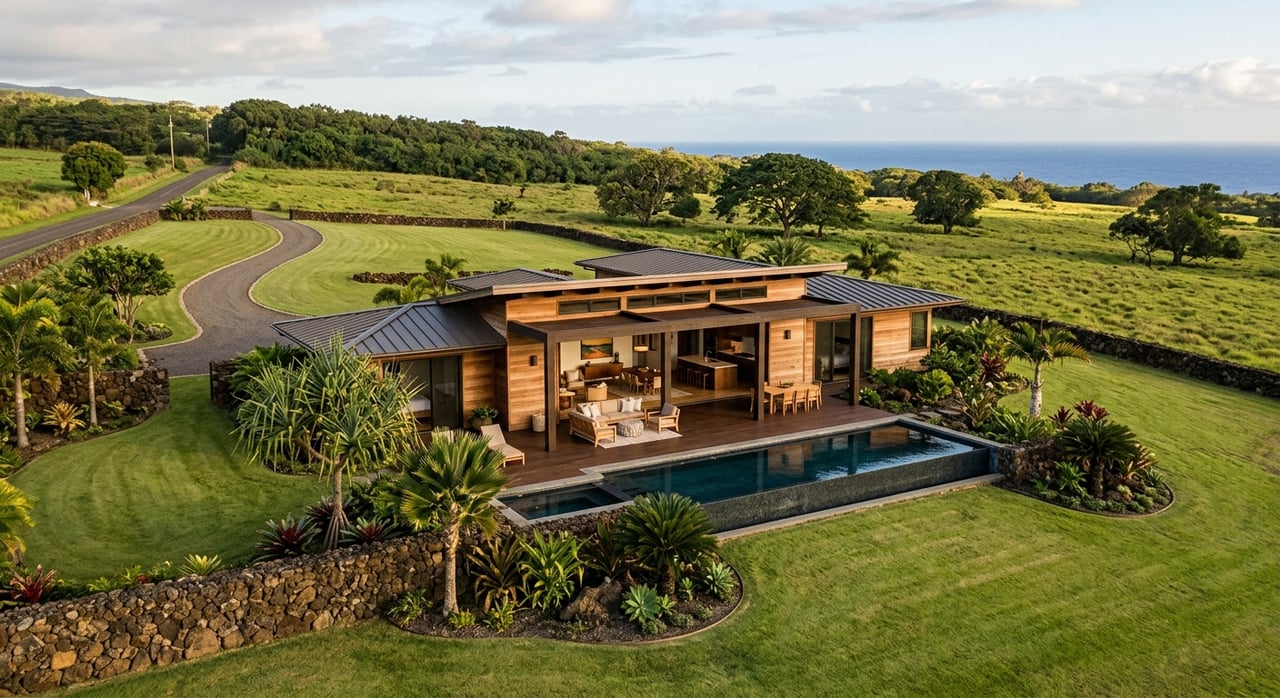
That history offers a useful lens for buyers today. Waimea indoor-outdoor living is not one fixed style. It can show up in a historic board-and-batten cottage, a larger home with working outbuildings, or a contemporary property that borrows practical ideas from older homes, such as ventilation, shelter, and strong relationships between the house and surrounding landscape.
Style matters less than livability
It is easy to get focused on aesthetics alone. A home may have charming architecture, generous lawn space, or a picture-perfect lanai. In Waimea, however, the most important question is whether those features are actually usable in the local climate.
This is where a design-informed home search can be especially valuable. When you look beyond finishes and square footage, you start to notice how a home handles wind, sun, moisture, and flow. That often leads to a better long-term fit.
A practical buyer checklist
If you are touring Waimea homes and want stronger indoor-outdoor living, keep this checklist in mind:
- Stand in the lanai and notice wind exposure
- Look at how windows are placed to capture breeze
- Check whether eaves or covered areas create shelter
- Ask how the outdoor space feels in cooler mornings
- Identify where the strongest sun hits the property
- Review the water setup for landscaping needs
- Look for windbreaks or natural protection on the lot
- Think about how you would actually use the space week to week
A home does not need to feel wide open to feel connected to the outdoors. In Waimea, the best homes often create that connection with more nuance.
The best Waimea homes feel grounded
The most compelling upcountry homes tend to feel settled into their setting rather than imposed on it. They respect the breeze, make room for changing weather, and create outdoor areas you can enjoy without constantly adjusting for discomfort. That kind of design often ages well because it is rooted in place.
If you are considering a move to Waimea or adding an upcountry property to your Hawai‘i Island search, it helps to view indoor-outdoor living through a local lens. Comfort here comes from proportion, orientation, shelter, and a realistic understanding of climate. When those pieces come together, the result can feel both elevated and deeply livable.
If you want help evaluating how a Waimea property will actually live day to day, Leslie Oxley-Friedrich brings a thoughtful design perspective and calm, detailed guidance to your Hawai‘i Island search.
FAQs
What does indoor-outdoor living in Waimea usually look like?
- In Waimea, indoor-outdoor living is usually about sheltered comfort rather than complete openness, with lanais, eaves, window placement, and protected seating areas working together to manage wind and cooler temperatures.
What should buyers look for in a Waimea lanai?
- Buyers should look for partial wind protection, covered areas, good access from main living spaces, and a layout that supports airflow without exposing the space to the full force of trade winds.
How does Waimea weather affect outdoor living at home?
- Waimea’s mid-elevation climate brings cooler mornings, breezy afternoons, seasonal rain, and drier summers, so outdoor spaces need to be comfortable in changing conditions rather than designed only for sunny days.
What matters most for gardens at Waimea homes?
- For gardens in Waimea, access to water, windbreaks, sun exposure, and the protected areas of the lot are all important factors in how usable and sustainable the outdoor space will be.
Why is water planning important for Waimea properties?
- Water planning matters because Waimea has a drier season and some properties may rely on systems like catchment or irrigation to support landscaping, gardens, or broader outdoor use.
Are historic home styles part of Waimea indoor-outdoor living?
- Yes, Waimea’s ranch and upland building traditions show how homes have long been designed around weather response, utility, ventilation, and a close connection to the land.